
Living Will vs Living Trust Arizona
Living Trust vs Living Will in AZ: The Differences, Similarities, and Which Is Right for You
When planning your estate, you may be confused about the best option for you. In this guide, learn about a living will vs a living trust.
A recent survey found that 67% of Americans do not have an estate plan in place. That means that only 33% of Americans are prepared for this time in life.
If you are working on estate planning, you may have considered a living will versus living trust. It is important to understand the legal lingo so that you can choose the right option. Our estate planning law firm will be pleased to help you.
A lot of legal terms during estate planning sound very similar. But all of these terms have different details that have an impact on your plan. It is common to also make confusion between living will and living trust, as well as living will and last will and testament.
Many people ask is living trust better than will? Keep reading to find out the difference between a living trust in Arizona vs living will. Wills and trusts are both important estate planning tools that your estate planning lawyer may use to address some of your estate planning needs. Making a wise decision about your estate planning documents can have a lasting impact on your family’s future.
What Is a Living Trust?
A Living Trust is also known as a revocable living trust or a revocable trust, a flexible legal tool commonly used in Arizona estate planning. When you are planning your estate, you need to consider every variable. One option you have is creating a revocable living trust that transfers ownership of your assets to a revocable trust as part of a comprehensive financial plan.
These assets are transferred to a trust that will be taken care of by the trustee of the Arizona living trust. You can serve as your own trustee while you are still alive, managing any trust assets, and appoint a successor trustee to take over after your death or incapacity. This ensures continuous management and control over your estate.
These assets, particularly real estate—which is a common asset type included in Arizona trusts—can be distributed upon your death or at any time you prefer. You are the grantor since you are signing the trust agreement to create your living trust.
The document will usually include details about the purpose of the trust and what it holds. It will also describe the responsibilities of the trustee and who the beneficiaries are. Trusts remain private legal documents, with details known only to the trustee and beneficiaries, thus providing a significant benefit of confidentiality not available with wills. Many Arizona residents choose revocable living trusts particularly for the privacy benefit, especially those concerned about potential family conflicts and issues or outside scrutiny of their final wishes.
After you create a living trust, you need to transfer legal ownership of your assets to the trust, like bank accounts and real property, following a clear living trust checklist in Arizona to ensure everything is properly funded. If you want a revocable living trust, you can assign yourself as the trustee first, have your surviving spouse as the successor trustee, and someone else after your death or if you became incapacitated.
If you don’t want your revocable living trust to stay as revocable you can make it irrevocable after your death or in case you became incapacitated. An irrevocable trust can’t be changed by the successor trustee, whereas a revocable trust can be changed in Arizona during your lifetime. An estate planning attorney that works with revocable trusts can help you with it.
Personal property is usually assigned to your trust using a will or pour over will that is created at the same time as your trust is created. A living trust is just one of several legal tools available for estate planning, and is often included in a standard Arizona estate plan—along with a will, living will, and financial power of attorney.
Here are some pros and cons to consider about this trust before making your decision.
Pros
One of the main advantages of a living trust is that it skips probate court. While the initial cost of setting up a living trust may be higher than that of a will, the benefit is that it can save money in the long run by avoiding probate costs, which can be 3-7% of the estate’s value. This allows your beneficiaries to access the assets at the time of your death more quickly and privately, as living trusts avoid the lengthy and public probate process. The probate process is not only more expensive than trust administration, it is also stressful. You want to make sure your loved ones are not subject to the probate process.
If the trust is irrevocable, it can also protect your assets from creditors for your future beneficiaries. This ensures that your beneficiaries get exactly what you want them to. That is usually called an asset protection trust or a dynasty trust.
A key benefit of a living trust is that it allows for the management of your assets if you become incapacitated, unlike a will, which only takes effect after death and does not provide for asset management during incapacity. Living trusts are particularly beneficial for those with larger estates, privacy concerns, or complex family situations.
A living trust in Arizona is also not public record, the probate process is a matter of public record. Living trusts help to protect the privacy of your family and give you complete control of your property. Estate plans are important to make sure your assets and property go to your loved ones. Living trusts achieve that by having trust beneficiaries. Your don’t one your children’s inheritance with a first spouse to end up at the wrong hands.
Cons
A Arizona living trust is not something you create once and your forget about it. Estate planning attorneys usually recommend reviewing your trust every 3 to 5 years.
For individuals with minimal assets, a living trust may not be necessary—often, a will or other simple estate planning documents may be sufficient. Creating a will in Arizona is generally less expensive than establishing a living trust and understanding the cost to create one in Arizona, with costs varying depending on whether you use a DIY service or hire a professional.
You need to update it to includes new assets you acquire over time or when your circumstances change as you age, or have a child, or you get a divorce. Although estate taxes are not an issue at the moment they may change overtime.
Hiring an estate planning lawyer is important to ensure everything is done correctly. If you create an irrevocable trust, you will most likely not be able to change it after creating it, although some exclusions may apply.
What Is a Living Will?
A living will is an estate planning document that allows individuals to specify their healthcare preferences and decisions in advance, particularly in situations where they become unable to communicate or make decisions for themselves. Importantly, a living will only pertains to healthcare decisions and does not manage financial assets.
A lot of people get confused between a living will and a last will and testament.
A last will and testament is a document that outlines an individual’s wishes for the distribution of their assets and the handling of their affairs after they pass away. In Arizona, to create a valid will, the person must be of sound mind at the time of drafting. A last will and testament alone does not avoid probate; you will be subject to probate proceedings following Arizona law.
A last will and testament is especially important for anyone that has minor children. Although you should consider creating a living trust for your children in Arizona, a last will tells the court who will be their guardians in case you are no longer with us.
A living will specifies the kind of care the individual wants if they become ill. You can create this document if you worry that you will become unable to communicate your wishes in the future due to an illness. In Arizona, a living will only takes effect when a doctor determines that the person is incapacitated, and Arizona doctors are legally required to follow a patient’s living will regarding medical care. A living will guides doctors and family members on end-of-life decisions.
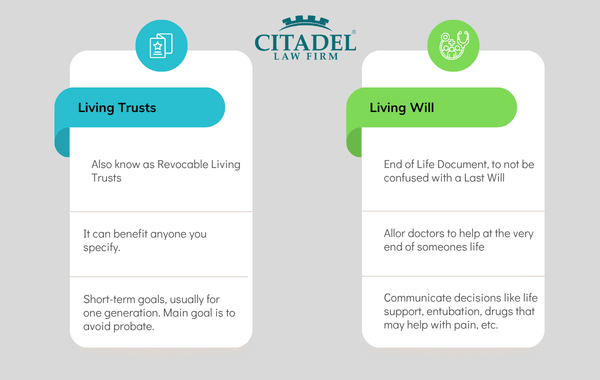
A living trust vs living will is very different when it comes to what you are creating. In Arizona, a living trust manages assets, while a living will manages medical care for end of life. A living will expresses issues related to your health care, not your assets or property. To address assets, you need to either create a will or a trust document.
A hospital will use your living will to address end-of-life decisions. For instance, you could include whether you do or do not want life-sustaining treatment.
This helps to take the pressure off your loved ones in the case of a medical emergency. It also ensures that your rights are upheld, and your wishes are followed through on.
Pros
A living will is perfect for people who have health concerns. For instance, you may have cancer and want specific treatments in the case of an emergency. A living will helps ensure your specific wishes regarding medical care are clearly documented and followed, so your intentions are honored even if you cannot communicate them yourself.
You may become unable to communicate what you want to your physicians or family. Having this document helps the process of getting medical care go smoother and can help protect your family’s future by reducing the likelihood of conflict over medical decisions. A living will is usually created together with health care power of attorney.
The hospital doesn’t have to wait for permission or for your family to decide. It also ensures that your family will not disagree over the kind of treatment you will get.
Cons
Are you wondering what is a living will? This is a very common question since people don’t understand this document.
It is important to create this will before you believe you will need it. If you wait too long, it may not apply if your mental capacity has been diminished.
In this case, a doctor could determine that the document is not valid. There is also still a chance that your wishes may not be upheld.
Family can argue against it to try to change the care you will receive. That is why it is so important to make sure it is created correctly with the help of an attorney.
How a Living Trust Works
A living trust—also called a revocable living trust—is simply a legal tool that lets you move your assets into a trust while you’re still alive and well. Think of yourself as the grantor (that’s just the legal term for the person who creates the trust), and here’s the beautiful part: you keep complete control over everything in that trust. You can change it, modify it, or even dissolve it entirely as your life circumstances evolve. When you establish a living trust here in Arizona, you’re giving yourself remarkable control over how your assets are managed and exactly how and when your loved ones will receive their inheritance—you get to set those specific terms that matter most to your family’s unique situation. Your trust document will name what we call a successor trustee (essentially the person you choose to step in and handle everything), and this individual will manage and distribute your trust assets if you pass away or become unable to handle things yourself, making sure your wishes are carried out exactly as you intended. By choosing a living trust in Arizona, you’re doing something really smart for your family: you’re helping them avoid the time-consuming, court-supervised probate process (which can be lengthy and expensive), you’re keeping your family’s financial matters private, and you’re creating a smooth, streamlined path for transferring your assets to the people you care about most.
Living Trust vs Living Will: What You Need to Know
If you are working on estate planning, you may be wondering what is a living trust. Understanding a living will vs living trust in Arizona is very important. A will is a legal document that only takes effect after death and typically names a personal representative to manage the estate during probate. During probate, wills become public court records (as part of the probate proceedings), exposing details about your assets, debts, family, beneficiaries, and distribution plans to anyone who searches court records. The probate process in Arizona usually takes 6-12 months for straightforward estates, but can extend to years if the will is contested or the estate is complex. The cost of probate in Arizona is usually between $5,000 to $10,000, including court fees, personal representative fees, and attorney costs, which can significantly reduce the value received by beneficiaries.
In contrast, a living trust operates during your lifetime and continues after your death, allowing for ongoing management of your assets. Trusts offer privacy and confidentiality in financial matters, as they are not public record and help protect sensitive information from public exposure and potential family conflicts. A pour-over will is often used alongside a living trust to ensure any assets not already transferred to the trust are directed to it after death. Many estate planning experts recommend having both a will and a living trust for comprehensive estate planning, especially for complex estates or those with minor children, as each serves different purposes and covers different aspects of asset management and distribution. Talk to your Arizona estate planning attorney to find out exactly what wills vs living trusts are and which is the best option for you!
A living trust is more focused on how your assets will be distributed. A living will is focused on the type of medical care you will receive at your end of life stage.
Are you interested in discussing your estate planning needs in Arizona? Contact us today at Citadel Law Firm to book a free estate planning consultation, click here. You can also call (480) 565-8020 to schedule your free consultation, we will be pleased to help. Call us today if you need a living trust in Phoenix, AZ. Our living trusts USA will be designed for your family and your assets.
Both a Will and a Living Trust
When I work with families here in Arizona, I typically recommend combining both a will and a living trust to create what I like to call a “safety net” approach to estate planning. Let me explain what each of these does for you.
A will is essentially your written instructions that tell everyone exactly how you want your belongings distributed after you pass away—think of it as your final wishes put down on paper. Together with a trust it is usually called a pour-over will, which acts like a backup plan to catch any assets that might have slipped through the cracks and weren’t formally moved into your trust.
A living trust, on the other hand, is a bit more sophisticated; it’s a legal arrangement that not only manages your assets while you’re still with us, but also seamlessly handles everything after you’re gone, often avoiding the lengthy probate process that can tie up your family’s inheritance.
When we put all these pieces together, you end up with comprehensive coverage that ensures nothing gets overlooked, your family knows exactly what you wanted, and everything moves smoothly without unnecessary delays or complications. This combined approach isn’t just good practice—it’s what gives my clients real peace of mind knowing their loved ones are truly protected.
Avoiding Probate
Let me walk you through something important about Arizona estate planning that many of my clients find surprising. If your estate is worth more than $200,000—and that threshold is reached more easily than you might think—Arizona law requires what’s called probate, which means a court will need to oversee how your assets are distributed after you pass away.
Now, I want you to understand what this really means for your family. Probate can stretch on for months, sometimes even years, and the costs can quickly add up between court fees and legal expenses. Perhaps most concerning to many families is that probate becomes a matter of public record, meaning anyone can access details about your estate and your final wishes.
Here’s where I often recommend considering a living trust—think of it as a protective container for your assets that allows you to maintain complete control during your lifetime while ensuring your loved ones can receive their inheritance privately and efficiently, without court delays or unnecessary expenses.
When you establish a living trust and properly fund it with your assets, you’re essentially creating a clear roadmap for your family that bypasses the probate process entirely, giving them the gift of privacy and peace of mind during what’s already a difficult time.
Protecting Your Family’s Future
When we talk about estate planning, I want you to know it goes far beyond simply deciding who gets what when you’re gone—it’s really about creating a safety net that protects the people you care about most. Here in Arizona, a well-crafted estate plan serves as your personal roadmap for three crucial areas: how your assets will be managed, who will make medical decisions if you can’t, and ensuring your final wishes are honored exactly as you intended.
By establishing what we call a living trust—think of it as a protective container for your assets—you’re giving your loved ones a tremendous gift: they’ll receive their inheritance smoothly and privately, without having to navigate the often complicated and public court system or deal with a court-appointed conservator (that’s a person the court would choose to manage things if you haven’t planned ahead).
This thoughtful approach does something really important—it shields your family from unnecessary stress during an already difficult time, helps prevent those painful family disagreements that can tear relationships apart, and ensures the legacy you’ve worked so hard to build stays intact. When you have a solid estate plan in place, you can rest easy knowing that your family’s future is protected and that your wishes will be carried out just the way you envisioned.
Call Citadel Law Firm PLLC today at (480) 565-8020 if you would like to work with us, it will be our pleasure to help.
Common questions we receive from clients:
Should I have a living trust?
Yes, having a living trust can provide more control over your assets, help avoid the formal probate court process, and ensure your beneficiaries receive their inheritance more quickly and privately. It is especially beneficial for those with larger estates, complex family dynamics (blended families), or privacy concerns. Consulting with an estate planning attorney can help determine if a living trust is the right tool for your situation.
Do I need a living trust?
A living trust can be a valuable tool in your estate plan, especially if you want to avoid the probate process, maintain privacy, and have greater control over how and when your assets are distributed to your chosen beneficiaries. It is particularly beneficial for those with larger or more complex estates, blended families, or specific wishes for asset management during incapacity.
However, not everyone needs a living trust; for individuals with simpler estates or fewer assets, a will may suffice. Consulting with an experienced Arizona estate planning attorney can help determine whether a living trust is appropriate for your unique situation and goals.
Should I set up an online will trust?
Setting up an online will or trust can be a convenient and cost-effective option for many people, especially those with straightforward estates and limited assets. Online services typically guide you through creating basic legal documents without the need for an attorney, making estate planning more accessible. However, there are key differences between online wills and trusts, and potential drawbacks to consider.
Online wills are generally simpler to create but will still require probate, which is a court supervised process that can be time-consuming and costly. In contrast, an online living trust can help you avoid probate by allowing assets held in the trust to transfer assets directly to beneficiaries without court involvement.
While online services may work well for simple situations, they often lack the personalized guidance needed for comprehensive plans or complex estates, particularly those involving blended families, minor children, or significant assets. Mistakes in funding a living trust or improperly drafted documents can lead to unintended consequences, including assets not transferring as intended.
For most estate plans, especially those involving substantial assets or unique family circumstances, working with an experienced Arizona estate planning attorney ensures you create a comprehensive plan tailored to your needs. This professional guidance helps protect your assets, avoid probate complications, and provide peace of mind that your wishes will be carried out smoothly.
In summary, setting up an online will or trust may be suitable for some, but it’s important to weigh the benefits against the limitations. Consulting with a legal expert can help you decide the best approach for your estate planning goals in Arizona.
Living Trust vs Testamentary Trust: What Is the Difference?
A living trust is created during your lifetime and takes effect immediately, allowing you to manage assets and avoid probate. A testamentary trust is established through your will after death and requires probate before activation. The main differences are timing and probate involvement. Choosing the right trust depends on your estate goals and family needs. Consult an estate planning lawyer to decide which suits you best.