
Last Will and Testament vs. Revocable Living Trust: Comprehensive Gilbert, AZ Estate Planning Guide for Legal Consultation
By David Gerszewski, Citadel Law Firm PLLC
Navigating the complexities of estate planning can be daunting, especially when choosing between a Last Will and Testament and a Revocable Living Trust. Understanding the differences, benefits, and important aspects of each can empower Gilbert residents to make informed decisions regarding their estate plans. This guide provides a comprehensive overview of these two critical legal documents, outlining their definitions and implications within the context of Arizona law. As individuals often grapple with planning for their futures, this article aims to clarify the unique advantages and considerations of each option, ensuring residents can protect their assets and loved ones effectively. We will discuss core differences, probate impacts, key benefits, and the consultation process with estate planning experts like Citadel Law Firm PLLC.
Estate Planning Guide for Gilbert, AZ Residents: Last Will and Testament vs. Revocable Living Trust
When planning an estate, Gilbert residents often face the critical decision of choosing between a Last Will and Testament and a Revocable Living Trust. Both documents serve essential roles in the estate planning process but function in fundamentally different ways. A Last Will specifies the distribution of assets upon death, while a Revocable Living Trust allows an individual to manage their assets during their lifetime and provides a seamless transition after passing. Understanding these distinctions is crucial for ensuring that one’s wishes are fully honored and legally protected.
To read more about wills and trusts attorney in Gilbert click here.
Definitions
The definitions of these legal documents are pivotal to understanding their respective functions:
Last Will and Testament: A legal document that specifies how your assets will be distributed after your death. It allows you to appoint an executor who ensures your wishes are carried out according to your directives. A Will alone will require probate in Arizona.
Revocable Living Trust: A legal arrangement created during your lifetime where you transfer assets into a trust. This document allows you to maintain control over your assets while you are alive and provides directives for asset distribution upon your passing.
Key Differences
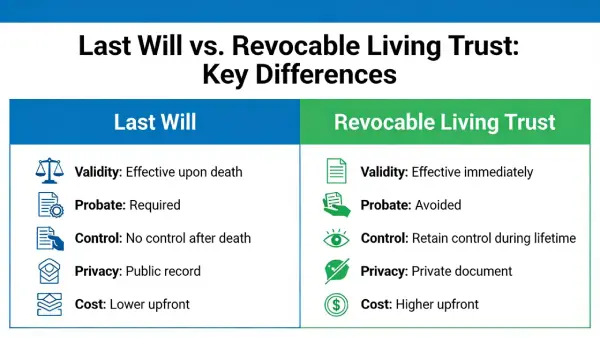
Understanding the differences between a Last Will and Testament and a Revocable Living Trust is critical for Gilbert residents:
| Feature | Last Will and Testament | Revocable Living Trust |
|---|---|---|
| Effective Date | Takes effect at death | Takes effect immediately upon creation |
| Probate | Must go through probate, which can be lengthy and costly | Avoids probate, allowing for quicker asset distribution |
| Privacy | Becomes public record during probate | Remains private, as it does not go through probate |
| Incapacity Protection | Does not provide protection in case of incapacity | Allows for management of assets in the event of incapacity |
| Cost | Generally lower initial setup costs | Higher setup cost but can save on probate fees later |
To learn more about the costs associate with creating a living trust read our article about it.
Benefits
Both a Last Will and Testament and a Revocable Living Trust have unique benefits tailored to different needs:
- Last Will and Testament Benefits: Simple to create and modify, making it accessible for many individuals. Names guardians for minor children, providing peace of mind for parents. Effective for distributing personal property and ensuring specific bequests.
- Revocable Living Trust Benefits: Avoids probate, saving time and costs associated with the probate process. Maintains privacy, protecting sensitive information from public disclosure. Facilitates immediate access to assets for beneficiaries, especially in cases of incapacity.
Important Considerations for Legal Consultation
When deciding between these two options, several important factors should be taken into account:
- Complexity of Estate: The more complex the estate, including multiple assets or family situations, the more beneficial a trust may be.
- Privacy Concerns: If privacy is a priority, a Revocable Living Trust offers significant advantages.
- Incapacity Planning: Consider how you wish your assets to be managed in the event you become incapacitated.
What Are the Core Differences Between a Last Will and Testament and a Revocable Living Trust in Gilbert, AZ?
The core differences reflect not only the functionality of each document but also their practical implications for estate planning. A Last Will is straightforward, focusing primarily on what happens after death, whereas a Revocable Living Trust provides ongoing management of assets. Understanding these nuances can help individuals in Gilbert make more informed decisions about their estate plans.
Usually when I trust is created we also create a pour-over will in Arizona, to learn more read our article about it.
How Does Probate Impact Wills Compared to Living Trusts?
Probate can significantly impact how estates are resolved in Arizona. A Last Will and Testament alone must go through this legal process, which can be time-consuming and costly, often taking several months to years. Conversely, a Revocable Living Trust allows for the immediate distribution of assets, bypassing probate entirely. This efficiency not only saves time but can also protect the estate‘s value from unnecessary erosion due to legal fees.
Under Arizona law (A.R.S. § 14-3971), an estate may only utilize the simplified Small Estate Affidavit process if the net value of personal property does not exceed $200,000 and real property equity does not exceed $300,000. Because typical home equity in Gilbert and throughout Maricopa County frequently surpasses the $300,000 real estate limit, estates relying solely on a Last Will and Testament generally must undergo formal or informal probate court administration.
Which Legal Documents Constitute Comprehensive Estate Planning in Arizona?
Comprehensive estate planning typically involves multiple legal documents, including:
- Last Will and Testament: Defines how assets are distributed.
- Revocable Living Trust: Manages assets during life and upon death.
- Power of Attorney: Designates someone to make financial decisions if you become incapacitated.
- Healthcare Directive: States your healthcare preferences in case you cannot communicate them.
- Living Will: Top not be confused with a Last Will and Testament. A living will is a document that talks about end of life decisions.
What Are the Advantages of Establishing a Revocable Living Trust for Gilbert Residents?
A Revocable Living Trust presents several advantages for individuals in Gilbert, including the ability to avoid probate, ensure privacy, and allow for seamless management of assets in case of incapacity. This versatility can be particularly beneficial for families with complex assets or those who desire a more organized estate plan.
How Does a Living Trust Provide Asset Protection and Privacy?
Trusts inherently offer more privacy than wills since they circumvent probate, which becomes a public record. Moreover, a Revocable Living Trust provides a level of asset protection, enabling individuals to dictate terms under which their assets will be managed posthumously or if they become incapacitated.
What Are the Typical Timeframes and Costs Associated with Living Trust Creation?
Typically, creating a Revocable Living Trust can range from several hundred to several thousand dollars, depending on the complexity of the assets involved and the legal fees of the drafting attorney. Once established, the time required to fund the trust can vary but is generally a straightforward process. It’s advisable for Gilbert residents to consult with legal professionals for accurate estimates based on their circumstances.
How Is a Last Will and Testament Created and Administered Under Gilbert, AZ Law?
Creating a Last Will in Arizona involves drafting the document according to state laws, which include having the will signed by witnesses and being of sound mind. The administration occurs after death, where the executor, named within the will, files it with the probate court and begins the distribution process according to the directives stated in the will.
If you are new to Arizona read our checklist for homeowners moving to Gilbert.
What Are the Essential Steps in Drafting a Valid Will?
To draft a valid will in Arizona, one should:
- Choose an executor: Appoint a trusted individual to oversee the estate.
- Identify assets: List all significant belongings and assets to be allocated.
- Outline beneficiaries: Specify who receives what and ensure their contact information is correct.
- Sign and witness: Ensure the will is signed by the testator and witnessed by at least two individuals.
How Does Arizona Probate Court Oversee Estate Distribution?
The Arizona probate court oversees the administration of deceased individuals’ estates, ensuring that the will is valid and that assets are distributed according to the deceased’s wishes. The process includes verifying assets, paying debts, and ultimately transferring ownership to the beneficiaries.
How Can Gilbert Residents Initiate Estate Planning Consultations with Citadel Law Firm PLLC?

Gilbert residents can initiate estate planning consultations by contacting Citadel Law Firm PLLC directly via phone at (480) 565-8020 or by sending an email to [email protected] or go to our contact page for more options. Engaging with a legal professional can significantly streamline the planning process, ensuring that all options are adequately addressed.
What Should Clients Expect During an Estate Planning Consultation?
During an estate planning consultation, clients can expect to discuss their wishes, family dynamics, and asset structures. A legal professional will tailor recommendations based on these discussions, ensuring that clients understand their options regarding Last Wills and Revocable Living Trusts.
How to Prepare for Your Meeting: Key Documents and Questions
To make the most of the initial consultation, clients should prepare:
-
A list of assets and their estimated values.
-
Key personal information, including family dynamics.
-
Questions regarding specific concerns or confusions they may have about estate planning.
Which Estate Planning Strategies Facilitate Probate Avoidance and Asset Control in Gilbert?
Strategies that facilitate probate avoidance include establishing a Revocable Living Trust and using pay-on-death accounts. Implementing these strategies can significantly streamline the estate distribution process, ensuring that beneficiaries receive their inheritance promptly and efficiently. At Citadel Law Firm we don’t believe everybody should have a trust. It is possible to avoid probate with the proper legal advice and address incapacity using powers of attorney.
What Are Common Trust Funding Steps Post-Creation?
Following the establishment of a trust, common funding steps include:
-
Transferring Real Estate: Deed properties into the name of the trust.
-
Retitling Financial Accounts: Update bank and investment accounts to reflect the trust‘s name.
-
Revising Beneficiary Designations: Ensure that life insurance policies and retirement accounts align with the trust‘s distribution plan.
How Do Wills and Trusts Affect Beneficiary Designations and Control?
Both wills and trusts influence how and when beneficiaries receive their inheritance. A trust can allow for distributions at various milestones in life, whereas a will typically transfers assets in a lump sum after probate. Understanding how these documents interact with beneficiary designations is crucial for effective estate planning.
What Are Frequently Asked Questions About Wills vs. Trusts Specific to Arizona Residents?
Residents often have questions regarding the advantages and disadvantages of each document type, especially concerning issues of asset protection, privacy, and control during incapacity. Consulting with professionals can provide clarity tailored to individual circumstances.
To learn more about the different types of trusts in Gilbert, AZ read our blog about it.
When Should You Choose a Living Trust Over a Will?
Choosing a Living Trust over a Will is advisable when privacy is essential, or when an individual seeks to assist in incapacity planning, as trusts can facilitate immediate management of assets without court intervention at the time of incapacity.
How Does Arizona Law Impact Revocability and Amendments of Trusts?
In Arizona, Revocable Living Trusts can be amended or revoked at any time during the grantor’s lifetime, which provides individuals with the flexibility to make changes as their circumstances or wishes evolve. Understanding these legal implications can significantly influence one’s estate planning strategy.
To plan for incapacity read our blog about powers of attorney, medical directives and living will.
Meet Attorney David Gerszewski

Attorney David Gerszewski is specialized in Estate Planning, Trust & Probate Law and the founder of Citadel Law Firm PLLC. He is known for making legal matters easy to understand. His background in finance and tax law makes the estate planning strategies he designs for his clients just right. He was elected a Rising Star by Superlawyers.com 4 years in a row (2023-2026).
WE WOULD LOVE TO HEAR FROM YOU!
CALL US AT (480) 565-8020
Or use the button below to schedule your free estate planning consultation.
