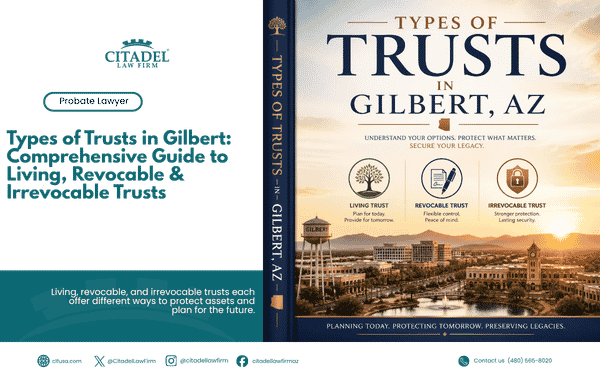
Types of Trusts in Gilbert, AZ: Comprehensive Guide to Living, Revocable & Irrevocable Trusts by Citadel Law Firm
Reviewed by David Gerszewski, Citadel Law Firm PLLC
Understanding the various types of trusts available in Gilbert, AZ, is crucial for effective estate planning.
Trusts function as essential tools in managing how your assets are distributed after your passing, offering distinct benefits regarding control, flexibility, and tax advantages. This comprehensive guide explores living trusts, revocable trusts, and irrevocable trusts, providing you with the insights needed to make informed decisions. As individuals navigate complex family dynamics and financial landscapes, utilizing trusts effectively can help mitigate disputes and optimize asset management.
The following sections will expalin each type of trust, shedding light on their core attributes and legal implications, including estate tax implications unique to Arizona.
Types of Trusts in Gilbert, AZ
Trusts are fundamental instruments in estate planning, allowing individuals in Gilbert, AZ, to manage and distribute their assets according to their wishes. There are various types of trusts, each with distinct features and benefits, making them suitable for different financial situations and goals. Below is an overview highlighting the key trust types, their characteristics, and legal implications.
| Trust Type | Characteristics | Legal Implications |
|---|---|---|
| Living Trusts | Provides flexibility and control over assets during the grantor’s lifetime. | Avoids probate with a smooth transition of assets to beneficiaries. |
| Revocable Trusts | Can be altered or revoked by the grantor anytime. | Assets are still included in the grantor’s estate for tax purposes. |
| Irrevocable Trusts | Cannot be easily changed and offer asset protection. | Assets are typically not included in the grantor’s estate for tax purposes. |
Trusts serve various functions, from managing assets during life to ensuring seamless transitions after death. Citadel Law Firm can help you select the type of trust that best aligns with your estate planning goals.
Living Trusts
A living trust is a legal arrangement established during the grantor’s lifetime, allowing them to control and manage their assets while they are alive. This type of trust provides individuals with significant flexibility, as the grantor can modify the trust as needed. Moreover, one of the major advantages of a living trust is its ability to avoid probate, thus facilitating a smoother transfer of assets upon the grantor’s death. This feature minimizes the time and effort required by heirs to access the trust’s assets.
The assets placed in a living trust can be managed by the grantor or a designated trustee, ensuring that beneficiaries receive their inheritances without unnecessary delays. Living trusts can include various assets such as real estate, bank accounts, investments, and personal property.
Revocable Trusts
Revocable trusts, often synonymous with living trusts, provide the grantor with the ability to change the terms or even dissolve the trust entirely. This flexibility can be advantageous in adapting to changing family or financial situations. However, assets within a revocable trust are still subject to estate taxes upon the grantor’s passing because the grantor retains control over the assets.
The main benefit of a revocable trust is that it allows for easy management of assets without the need for a lengthy court process after the grantor’s death. Establishing a revocable trust can also empower individuals to maintain privacy regarding their assets, as it does not undergo public probate.
If you need to understand more about different types of special needs trusts in Gilbert, Arizona trust options read out blog about it.
Irrevocable Trusts
In contrast to revocable trusts, irrevocable trusts cannot be altered or revoked once established, which can offer a higher degree of asset protection. Once assets are placed into an irrevocable trust, they are effectively removed from the grantor’s estate, which helps minimize estate taxes. This feature makes irrevocable trusts an appealing option for those concerned about estate taxes or wishing to protect assets from creditors. For individuals seeking to safeguard assets while potentially qualifying for government assistance programs, an irrevocable trust can be a valuable tool. The legal implications surrounding irrevocable trusts highlight their importance in effective estate and financial management.
Moreover, individuals who may qualify for government assistance programs can benefit from irrevocable trusts, as they can help ensure eligibility while safeguarding assets for heirs. The legal implications surrounding irrevocable trusts highlight their importance in effective estate and financial management.
Understanding the key types of trusts available in Gilbert, AZ, is pivotal for anyone considering estate planning. Each trust type—living, revocable, and irrevocable—offers distinct advantages and serves different purposes. The selection of the right trust can significantly impact both the management of assets during a person’s lifetime and the distribution of those assets after death.
Citadel Law Firm specializes in estate planning, including the establishment and management of various trusts, and can provide expert guidance to help you navigate this important process.
What Are the Key Types of Trusts Used in Gilbert, Arizona?
Several trusts, including living, revocable, and irrevocable trusts, are commonly used in Gilbert, AZ. Each type serves specific needs and offers unique features that cater to individual circumstances.
Defining Revocable Living Trusts and Their Core Attributes
A revocable living trust allows flexibility for the grantor to change the terms, providing control over their assets, which can be an essential aspect of estate planning.
Understanding Irrevocable Trusts: Legal Implications and Applications
Irrevocable trusts offer asset protection and minimization of estate taxes, which is useful for estate planning in very specific cases.
How Do Revocable Living Trusts Provide Benefits for Arizona Estate Planning?
Revocable living trusts facilitate smoother transitions of assets and avoid probate, aiding families in their estate management strategies.
To understand how living trusts avoid probate in Arizona read out article about it.
What Are the Estate Tax Planning Advantages of Revocable Trusts in Gilbert?
Revocable trusts can streamline the estate planning process and help keep assets from confusing or lengthy probate processes, thus minimizing costs for heirs. A Revocable Trust alone not necessaraily provide estate tax planning advantages, it may provide in specific cases when properly done by an attorney.
How Does the Revocable Living Trust Setup Process Work Locally?
Setting up a revocable living trust in Gilbert involves several steps, including drafting the trust document and transferring assets into the trust. Consulting with an attorney specilaized in trust can ensure that individuals are guided through these processes effectively.

What Are the Pros and Cons of Irrevocable Trusts in Gilbert, AZ?
Irrevocable trusts provide various benefits, including tax benefits, but they also come with limitations regarding control over the assets put in trust.
How Do Irrevocable Trusts Protect Assets Under Arizona Law?
Irrevocable trusts can effectively shield assets from creditors and legal claims, which is particularly valuable for individuals concerned about personal liability.
What Are the Tax and Legal Considerations for Irrevocable Trusts?
Those exploring irrevocable trusts must understand the implications regarding estate and gift taxes, as well as the permanent nature of such trusts.
How Does a Living Trust Compare to a Will in Arizona Estate Planning?
Living trusts offer several advantages over a will, especially in terms of avoiding probate and providing for seamless asset management.
What Are the Legal Differences Between Living Trusts and Wills in Arizona?
The legal distinctions between living trusts and wills lie primarily in their management during the grantor’s lifetime and the probate process.
Which Option Best Serves Gilbert Residents Seeking Optimal Estate Management?
Choosing between a living trust and a will depends on individual needs, asset types, and family circumstances. An Arizona Beneficiary Deed (A.R.S. § 33-405) is a good option as well.
What Are the Essential Steps to Set Up a Trust in Gilbert, AZ?
Setting up a trust in Gilbert involves understanding the legal implications, preparing the necessary documents, and possibly consulting with a legal expert.
How to Initiate an Estate Planning Consultation with Citadel Law Firm?
To initiate an estate planning consultation with Citadel Law Firm, reaching out directly can provide valuable insights into personalized estate planning solutions.
What Legal Documentation and Trust Funding Processes Are Required Locally?
Proper documentation is essential in establishing a trust, including drafting trust agreements and transferring assets to the trust.
How Are Trusts Administered and Managed in Gilbert: Trustee Roles and Responsibilities?
Trust management involves designated trustees executing their duties according to the trust’s terms, distributing assets per the grantor’s wishes, and maintaining accurate records.
What Is the Trustee’s Role in Managing Trust Assets According to Arizona Law?
The trustee is responsible for overseeing the trust, ensuring compliance with legal obligations, and acting in the best interest of the beneficiaries.
How Is Trust Administration Handled for Revocable and Irrevocable Trusts?
Trust administration varies based on the type of trust, with irrevocable trusts typically requiring more stringent compliance with regulations.
If you need help from a Gilbert living trust and estate planning lawyer click here. If you are moving check our estate planning checklist for new Arizona residents.
Meet Attorney David Gerszewski

Attorney David Gerszewski is specialized in Estate Planning, Trust & Probate Law and the founder of Citadel Law Firm PLLC. He is known for making legal matters easy to understand. His background in finance and tax law makes the estate planning strategies he designs for his clients just right. He was elected a Rising Star by Superlawyers.com 4 years in a row (2023-2026).
WE WOULD LOVE TO HEAR FROM YOU!
CALL US AT (480) 565-8020
Or use the button below to schedule your free estate planning consultation.
