
Many people want their estate plan to do more than transfer wealth to family. They may also want to support a charitable organisation, provide income for themselves or a loved one, and make thoughtful decisions about appreciated assets.
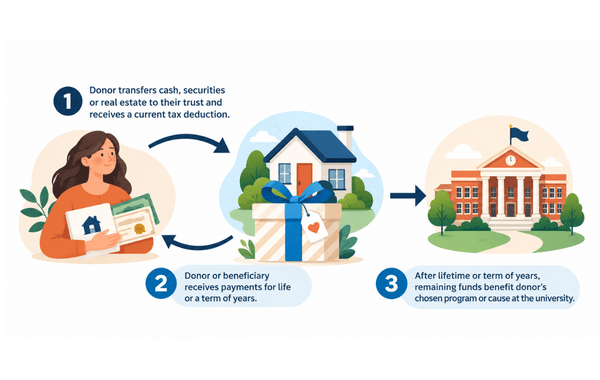
A charitable remainder trust (CRT) may help combine these goals. It is an irrevocable trust that pays one or more noncharitable beneficiaries for a specified period or their lifetimes, with the remaining trust assets eventually distributed to one or more qualified charitable organisations. For Arizona residents considering charitable giving, understanding how this arrangement works is an important first step.
Key Takeaways
- A charitable remainder trust is an irrevocable trust combining an income interest with a future charitable gift.
- The trust pays noncharitable beneficiaries for a defined period, subject to the trust’s terms and federal requirements.
- The remaining assets pass to qualified charitable organisations when the payment period ends.
- The two principal types are charitable remainder annuity trusts (CRATs) and charitable remainder unitrusts (CRUTs).
- Potential tax advantages depend on the assets, trust structure, and applicable federal and state rules.
- A CRT is not suitable for everyone because contributed assets generally cannot be reclaimed by the donor.
What Is a Charitable Remainder Trust?
A charitable remainder trust is a legal arrangement in which a donor transfers assets into an irrevocable trust. The trust makes payments to one or more designated noncharitable beneficiaries, generally for their lifetimes or for a specified term that cannot exceed 20 years. At the end of the payment period, the remaining trust assets pass to qualified charitable organisations.
The IRS sets requirements for charitable remainder trusts, including a minimum remainder value of 10% of the initial net fair market value of the contributed property. The arrangement may appeal to people who want to balance income planning with a long-term charitable goal.
A simple example
Imagine an Arizona resident owns appreciated investments and wants to support a charity while providing income during retirement. The resident establishes a properly structured CRT and transfers eligible assets into it. The trust manages or sells the assets according to its terms, makes payments to the designated beneficiary, and ultimately distributes the remaining assets to the chosen charity. The actual income and tax treatment depend on the trust’s structure, investment performance, expenses, and applicable rules.
How Does a Charitable Remainder Trust Work?
Establish the trust
The donor works with qualified legal and tax professionals to determine whether a CRT fits their goals. The trust document identifies beneficiaries, charitable recipients, payment structure, trustee, and other terms. Because the trust is irrevocable, the donor should consider the decision carefully before transferring assets.
Transfer assets into the trust
Depending on the trust terms and applicable rules, assets may include cash, publicly traded securities, or certain other property. Suitability depends on liquidity, valuation, tax basis, and transfer restrictions. Closely held business interests or encumbered property may require additional analysis.
Make payments to beneficiaries
The trust makes payments according to the selected structure. These may provide income to the donor or other beneficiaries, subject to the trust terms and legal requirements. The trustee administers the trust and follows its terms.
Distribute the remainder to charity
When the payment term ends, the remaining trust property passes to the qualified charitable organisations named in the trust. The charitable provisions should be drafted carefully.
CRAT vs. CRUT: What Is the Difference?
Feature | CRAT | CRUT |
Payment calculation | Fixed annuity amount established under the trust terms | Fixed percentage of trust value, recalculated as required |
Effect of investment performance | Stated payment generally remains fixed, subject to trust terms and available assets | Payments may rise or fall as trust value changes |
Additional contributions | Generally not permitted after initial contribution | May be permitted, depending on terms and applicable rules |
Planning consideration | Predictability of payment amount | Payments linked to changing trust value |
Neither structure is automatically better. A CRAT may appeal to someone who values a predictable payment amount, while a CRUT may suit someone who wants payments linked to the trust’s changing value. The right choice depends on income needs, assets, beneficiaries, charitable objectives, and tax circumstances.
Potential Benefits of a Charitable Remainder Trust
Income during the payment period
A CRT can provide payments to designated beneficiaries during their lifetimes or a specified term. This may support retirement or other financial goals. The amount and tax character depend on the trust structure, investment results, and applicable rules; a CRT should not be treated as a guaranteed-income product.
Potential capital gains tax planning
In some circumstances, a CRT may allow appreciated assets to be sold inside the trust without the donor immediately recognising the same gain that would arise from a direct personal sale. This does not mean the gain disappears. Tax treatment of later distributions and transactions depends on the applicable rules and the trust’s income character.
Potential charitable income tax deduction
A qualifying contribution may generate a partial charitable income tax deduction based on the value of the charitable remainder interest, subject to federal tax rules and applicable limitations. The deduction is not necessarily equal to the value of the assets transferred. Beneficiary ages, payment rate, trust term, valuation rates, and other factors may affect the calculation.
A planned charitable legacy
A CRT can support a cause while addressing income needs during life. The trust document identifies charitable recipients and provides a framework for distributing the remaining assets after the payment period.
Risks and Limitations to Consider
A CRT is a specialised planning tool, and its benefits must be weighed against its limitations.
Irrevocability: The donor generally cannot take the assets back for personal use.
No guaranteed income: Investment performance, fees, and the payment structure affect the trust’s ability to meet its obligations.
Costs: Legal drafting, tax advice, trustee services, investment management, and administration may create expenses.
Variable tax outcomes: Deductions and capital gains planning benefits are not automatic.
Charitable remainder: The charity ultimately receives the remainder, so the full initial asset value will not remain available to family members.
Because a CRT needs careful ongoing management, review the firm’s trust administration services as you consider administration responsibilities. For a broader introduction to the planning process, see what estate planning involves.
Is a Charitable Remainder Trust Right for Arizona Residents?
A CRT may be worth exploring if you have appreciated assets, want to provide income to yourself or another beneficiary, and have a genuine charitable giving goal. It may be less suitable if you need unrestricted access to the assets, want to reverse the transfer, or prefer to keep the entire asset value available to family.
Arizona residents should consider how a CRT fits with their broader estate plan, including existing trusts, beneficiary designations, retirement planning, and other charitable arrangements. An essential steps to creating an estate plan in Arizona can help clarify how documents work together. A revocable living trust services serves a different purpose from a CRT, so the two should not be treated as direct substitutes.
How to Establish a Charitable Remainder Trust
Before proceeding, define your income needs and charitable objectives; identify assets you may contribute; review likely tax implications with a qualified tax adviser; compare CRAT and CRUT structures; select appropriate trustees and charitable beneficiaries; have the trust drafted and reviewed; and understand ongoing administration and reporting requirements. The decision should be based on a realistic assessment of the financial, legal, and charitable consequences.
Frequently Asked Questions
Is a charitable remainder trust taxable?
A CRT has specific federal tax treatment, but it is not simply tax-free. The trust may have reporting obligations, and distributions may carry different tax characteristics depending on the income involved.
Can I change my mind after creating a charitable remainder trust?
Generally, a CRT is irrevocable. The donor cannot ordinarily reclaim contributed assets or freely cancel the arrangement. The trust document and applicable law govern any permitted changes.
Can a charitable remainder trust benefit my family?
Yes. The trust may provide payments to one or more noncharitable beneficiaries, including family members, during the payment period. The remaining assets then pass to the designated charities.
Does Arizona have special charitable remainder trust rules?
A CRT must satisfy applicable federal requirements. Arizona law and other state-specific considerations may affect trust administration and related matters. An Arizona attorney and qualified tax adviser can assess the requirements.
Is a charitable remainder trust the same as a charitable lead trust?
No. A charitable remainder trust generally pays noncharitable beneficiaries first and distributes the remainder to charity. A charitable lead trust generally pays charity first, with the remainder eventually passing to noncharitable beneficiaries under the trust terms.
Make Charitable Giving Part of a Thoughtful Estate Plan
A charitable remainder trust may provide payments to designated beneficiaries while supporting a charitable cause. Its irrevocable nature, administrative costs, and tax implications require careful consideration. If you are exploring charitable giving or other trust arrangements in Arizona, Citadel Law Firm can help you understand how trust planning may fit your goals.
This article is for general educational purposes only and is not legal, financial, or tax advice. Consult qualified professionals before transferring assets or establishing a charitable remainder trust.
Meet Attorney David Gerszewski

Attorney David Gerszewski is specialized in Estate Planning, Trust & Probate Law and the founder of Citadel Law Firm PLLC. He is known for making legal matters easy to understand. His background in finance and tax law makes the estate planning strategies he designs for his clients just right. He was elected a Rising Star by Superlawyers.com 4 years in a row (2023-2026).
WE WOULD LOVE TO HEAR FROM YOU!
CALL US AT (480) 565-8020
Or use the button below to schedule your free estate planning consultation.
