
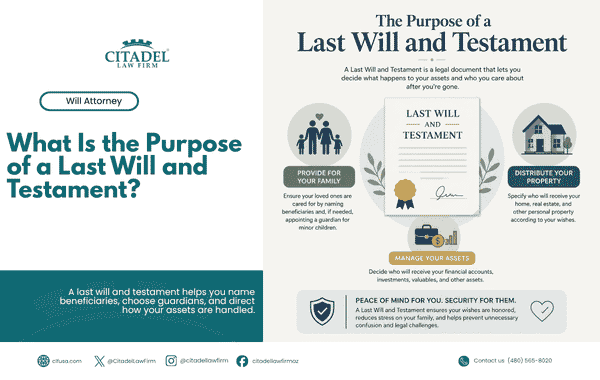
Thinking about what happens after you’re gone isn’t easy, but having a plan in place can make a difficult time much easier for the people you care about. One of the most important estate planning documents you can create is a last will and testament. It allows you to decide who receives your property, who will manage your estate, and who should care for your minor children if something happens to you.
If you’ve ever wondered what is the purpose of a last will and testament, the answer is simple: it gives you a voice after your death. Without a valid will, Arizona law determines how your assets are distributed, which may not reflect your wishes.
Whether you’re creating your first estate plan or updating an existing one, understanding what a will does and doesn’t do can help you make informed decisions for your future.
What Is a Last Will and Testament?
A last will and testament is a legally binding document that explains how you want your property and responsibilities handled after your death. It lets you name the people who should inherit your assets, appoint someone to administer your estate, and designate a guardian for your minor children if needed.
In Arizona, a will generally becomes effective after your death and is submitted to the probate court. The court oversees the administration of your estate and ensures your wishes are carried out according to Arizona law.
For a will to be valid, it must comply with Arizona’s legal requirements under A.R.S. § 14-2502, including being signed by the person making the will and properly witnessed, unless another legally recognised form of execution applies.
Although probate is often associated with delays or complications, having a properly prepared will usually makes the process more organised than leaving no instructions at all.
What Is the Purpose of a Last Will and Testament?
A last will serves several important purposes beyond deciding who receives your belongings. It provides clear legal instructions that can reduce confusion, minimise disputes, and protect your loved ones during a difficult time.
Decide Who Receives Your Property
One of the primary reasons people create a will is to determine who inherits their estate. You can leave your home, vehicles, bank accounts, jewellery, family heirlooms, and other personal property to the people or organisations you choose.
Without a will, Arizona’s intestate succession laws determine who receives your assets, regardless of your personal preferences.
Name a Personal Representative
Your will allows you to appoint a personal representative, sometimes referred to as an executor in other states. This person is responsible for managing your estate, paying outstanding debts, filing required court documents, and distributing assets to your beneficiaries.
Choosing someone you trust can help ensure your estate is administered efficiently.
Protect Minor Children
If you have young children, a will allows you to nominate the person you want to serve as their guardian if both parents pass away.
While the court ultimately decides what is in the child’s best interests, your nomination carries significant weight and provides valuable guidance.
Reduce Family Disputes
Clear instructions often prevent disagreements among family members. When your wishes are documented, there is less room for misunderstandings about who should inherit certain assets or who should manage your estate.
Although disputes can still arise, a properly drafted will often reduces uncertainty.
Leave Gifts to Friends or Charities
A will also allows you to leave specific gifts to people outside your immediate family or support charitable organisations that are meaningful to you.
Without a will, these gifts generally cannot be made through Arizona’s intestacy laws.
What Happens If You Die Without a Will in Arizona?
When someone dies without a valid will, they are considered to have died intestate.
In these situations, Arizona’s intestate succession laws determine who inherits the estate. Depending on your family situation, your spouse, children, parents, or other relatives may receive your property according to a statutory order established in A.R.S. Title 14.
This legal formula may not reflect your personal wishes.
For example, you cannot choose a close friend, unmarried partner, stepchild, or favourite charity to receive assets unless they are entitled to inherit under Arizona law or you have another estate planning tool in place.
Dying without a will may also increase the likelihood of disagreements among surviving family members, particularly when there are blended families or complicated financial circumstances.
Read more: https://clfusa.com/estate-planning/living-trust/living-trust-checklist-arizona/
What Can You Include in a Last Will and Testament?
A well-prepared will can cover many aspects of your estate.
Common provisions include:
- Who inherits your home and other real estate
- Distribution of vehicles and valuable personal property
- Family heirlooms and sentimental belongings
- Cash gifts to beneficiaries
- Appointment of a personal representative
- Nomination of a guardian for minor children
- Instructions for distributing the remainder of your estate after debts are paid
Some people also include funeral preferences or burial wishes, although these instructions are often better communicated separately because a will may not be reviewed until after funeral arrangements have already begun.
What Cannot Be Controlled by a Will?
While a will is an essential estate planning document, it does not control every asset you own.
Generally, a will does not override beneficiary designations or ownership arrangements already in place.
Examples include:
- Life insurance policies with named beneficiaries
- Retirement accounts, such as 401(k)s and IRAs
- Payable-on-death (POD) bank accounts
- Transfer-on-death (TOD) investment accounts
- Property held in a living trust
- Jointly owned property with rights of survivorship
Because these assets typically pass outside probate, reviewing beneficiary designations regularly is an important part of maintaining a complete estate plan.
Do You Need a Lawyer to Create a Will?
Arizona law does not require you to hire an attorney to create a valid will. Many people choose online templates or do-it-yourself forms.
However, those options may not address your unique circumstances or comply with Arizona’s legal requirements if completed incorrectly.
Working with an experienced estate planning attorney can be especially valuable if you:
- Own a business
- Have blended families
- Own multiple properties
- Have significant assets
- Want to minimise future disputes
- Need coordinated estate planning documents such as trusts or powers of attorney
A professionally prepared will can help reduce mistakes that may lead to costly probate litigation later.
When Should You Update Your Will?
Creating a will is only the first step. Your estate plan should evolve as your life changes.
It’s a good idea to review your will after major life events, including:
- Marriage
- Divorce
- Birth or adoption of a child
- Death of a beneficiary
- Purchasing or selling significant assets
- Starting or selling a business
- Moving to Arizona
- Significant changes in your financial situation
Even without major life changes, reviewing your estate plan every few years helps ensure it still reflects your wishes and complies with current Arizona law.
Common Mistakes to Avoid
Many estate planning problems stem from avoidable mistakes rather than complicated legal issues.
Some of the most common include:
Waiting Too Long
Many people assume estate planning is only for retirees. In reality, every adult should consider having a will.
Forgetting to Update Beneficiaries
Changes to life insurance or retirement accounts should be coordinated with your overall estate plan.
Choosing the Wrong Personal Representative
Your chosen representative should be organised, trustworthy, and capable of handling financial and legal responsibilities.
Failing to Follow Arizona’s Legal Requirements
An improperly executed will may be challenged during probate or declared invalid.
Not Telling Anyone Where the Will Is Stored
A carefully prepared will cannot help your family if nobody knows where to find it.
When Should You Speak with an Estate Planning Attorney?
While every adult can benefit from having a will, professional guidance becomes especially valuable when your family or financial circumstances are more complex.
You should consider speaking with an estate planning attorney if:
- You recently got married or divorced.
- You have children or grandchildren you want to protect.
- You own a home, business, or investment property.
- You want to minimize future probate complications.
- You have concerns about family disagreements.
- You need additional estate planning documents, such as trusts or powers of attorney.
Creating a comprehensive estate plan now can provide peace of mind and make things significantly easier for your loved ones later.
Read more: https://clfusa.com/wills-power-of-attorney/will/living-will-vs-last-will-and-testament-in-arizona/
Frequently Asked Questions
What is the main purpose of a last will and testament?
The primary purpose of a last will and testament is to direct how your property should be distributed after your death, appoint a personal representative to manage your estate, and nominate a guardian for your minor children.
Does a will avoid probate in Arizona?
No. A will generally goes through probate. It provides instructions to the probate court rather than avoiding the process altogether. Other estate planning tools, such as certain trusts, may help reduce probate for some assets.
Can I write my own will in Arizona?
Yes. Arizona allows individuals to create their own wills if they meet the state’s legal requirements. However, mistakes in drafting or execution may create complications during probate.
Who should have a last will and testament?
Every adult who owns property, has children, or wants control over how their estate is distributed should consider having a valid will.
Can a will be changed after it is signed?
Yes. You can update your will by creating a legally valid amendment, known as a codicil, or by executing a new will that replaces the previous one.
What happens if someone contests my will?
A will contest may arise if someone believes the document was improperly executed, created under undue influence, or signed when the person lacked legal capacity. Probate courts evaluate these claims based on Arizona law and the available evidence.
Protect Your Wishes with a Comprehensive Estate Plan
A last will and testament is one of the most valuable tools you can use to protect your family and your legacy. It gives you the opportunity to decide who receives your property, appoint trusted individuals to manage your estate, and provide guidance that can reduce confusion after your passing.
Without a valid will, Arizona law – not you – determines how your estate is distributed. Taking the time to create or update your estate plan today can save your loved ones unnecessary stress and uncertainty in the future.
At Citadel Law Firm, we help individuals and families throughout Phoenix, Chandler, and the surrounding communities create personalised estate plans that reflect their goals and protect the people who matter most. Whether you’re preparing your first will or reviewing an existing plan, our team is here to guide you every step of the way.
Schedule a free consultation today to begin building an estate plan that gives you and your family lasting peace of mind.
Meet Attorney David Gerszewski

Attorney David Gerszewski is specialized in Estate Planning, Trust & Probate Law and the founder of Citadel Law Firm PLLC. He is known for making legal matters easy to understand. His background in finance and tax law makes the estate planning strategies he designs for his clients just right. He was elected a Rising Star by Superlawyers.com 4 years in a row (2023-2026).
WE WOULD LOVE TO HEAR FROM YOU!
CALL US AT (480) 565-8020
Or use the button below to schedule your free estate planning consultation.
