How To Address a Vehicle as Part of my Estate Planning in Arizona? A Guide to Our Clients
By Citadel Law Firm PLLC Editorial Team · Updated 2026-08-17
Wondering what happens to your car, truck, RV, or motorcycle after you’re gone? Arizona makes it easy: ADOT’s Beneficiary Designation Form 96-0561 lets you name a person or trust to inherit your vehicle, skipping probate entirely. Some families prefer titling their vehicles directly into a revocable trust instead, and that works well too. Citadel Law Firm is here to help Phoenix East Valley clients figure out which approach fits best into their overall estate plan.
Key Takeaways
Arizona ADOT allows you to name a beneficiary for your vehicle, bypassing probate entirely.
Beneficiary designations work for cars, trucks, RVs, mobile homes, and motorcycles through ADOT’s official form.
Transferring vehicle titles to trusts reduces probate costs and simplifies asset distribution at death.
Estate planning attorneys recommend beneficiary forms as the easiest, least expensive vehicle transfer method, if you don’t have a revocable living trust.
What Do You Need Before To Do To Address Your Vehicle?
Three items matter most: current title, a clear decision on the intended recipient, and knowledge of whether the vehicle sits inside a trust or outside one. Arizona law allows a vehicle to pass directly to a chosen recipient without going through probate. That outcome only happens when the paperwork is completed correctly beforehand. Clients working with Citadel Law Firm estate planning attorneys know what to do. Most people often assume a will alone handles a car. It does not, unless the title has been properly coordinated with the broader plan.
Can a car have a beneficiary like a bank account?
Yes. Arizona vehicle owners can name a beneficiary for a car much like naming one for a bank account or life insurance policy. This option matters for anyone wondering how to include vehicle in estate plan Arizona documents. It creates a direct line of transfer outside the probate court process.
What documents should be gathered first?
Before meeting with an attorney, clients should collect the following:
The current vehicle title, showing the registered owner’s name exactly as it appears with the state.
Loan or lien documentation, if the vehicle is not fully paid off.
The intended recipient’s full legal name and relationship to the owner.
Any existing trust documents, to confirm whether the vehicle is already titled to the trust.
Owners of classic, antique, or high-value vehicles have additional considerations. Collectible car estate planning Arizona cases often involve appraisals and insurance riders that standard vehicle transfers do not require. Gathering these records early prevents delays once the transfer paperwork is filed.
Citadel Law Firm serves families throughout Chandler, Gilbert, Queen Creek, and Scottsdale, guiding clients through each document requirement before filing begins.
How Do You Complete Arizona’s ADOT Beneficiary Form?
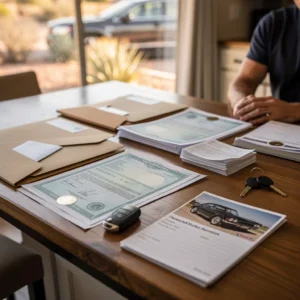
Arizona vehicle owners name a vehicle heir by filing the Arizona MVD beneficiary form 96-0561 with the Arizona Department of Transportation. This document, formally titled the ADOT beneficiary designation form, lets an owner record who should receive a car, truck, motorcycle, or RV after death. Completing it correctly answers a practical question many Citadel Law Firm clients raise when working out how to include vehicle in estate plan Arizona strategies: how does a vehicle pass to heirs without probate court involvement?
The form works as an Arizona vehicle transfer on death tool, functioning much like a beneficiary designation on a bank or brokerage account. Ownership stays entirely with the titled owner during life. The named beneficiary gains no rights, access, or claim to the vehicle until the owner’s death.
What Steps Does the Filing Process Involve?
Owners follow a short sequence to put the designation in place:
- Obtain Form 96-0561 from ADOT using link https://azdot.gov/mvd-doc-lib/beneficiary-designation.
- Enter the vehicle identification number, title details, and current owner information accurately.
- Name the intended beneficiary, whether an individual or a properly established trust.
- Sign the form according to ADOT’s requirements and keep it with the title for the vehicle. The form does not need to be notarized.
Does the Beneficiary Form Replace a Trust?
No single form substitutes for a fully coordinated estate plan. A beneficiary designation moves one vehicle efficiently. Families with multiple vehicles, collector cars, or complex holdings often need broader planning. Citadel Law Firm estate planning attorneys review how a vehicle designation interacts with existing trusts, wills, and other transfer-on-death arrangements already in place for a client’s estate. Citadel clients that have a trust are instructed to move the title of the vehicle to their trust.
Errors on the form, outdated beneficiary names, or mismatched title information create unnecessary delays for surviving family members. Reviewing the completed form alongside the rest of an estate plan helps confirm that a vehicle, including any vehicle held for transfer car title to trust Arizona purposes, moves to the intended person without added complication.

Should You Transfer Your Car Title to a Trust?
Arizona vehicle owners with a revocable living trust often face one recurring question: should the family sedan, truck, or classic convertible be titled in the trust’s name? Estate planning attorneys pursue one core objective — moving assets to heirs as quickly and inexpensively as possible after death. A vehicle left outside the trust can still cause delays (although it should not trigger a probate), added costs, and paperwork burdens for grieving family members across Chandler, Gilbert, Queen Creek, and Maricopa.
Clients of Citadel Law Firm raise this exact issue during trust reviews on a regular basis. The answer depends on the vehicle’s value, use, and whether it qualifies as a collectible car estate planning asset in Arizona. High-value or classic vehicles typically warrant trust titling, while an everyday commuter car may not justify the paperwork. We still recommend retitling the car to the trust anyhow.
Citadel Law Firm estate planning services cover this decision directly, including revocable and irrevocable trusts, wills, powers of attorney, and probate guidance tailored to vehicle-related titling questions.
Is retitling a car into a trust actually worth the paperwork?
Retitling makes sense when a vehicle carries significant resale or sentimental value, such as a restored classic or a low-mileage collector model. For an ordinary daily driver, a simpler transfer-on-death designation may accomplish the same probate-avoidance goal with less effort.
To determine whether transfer car title to trust Arizona procedures apply to a specific vehicle, clients should follow these steps:
Identify each vehicle’s current market value and titling status.
Review whether the vehicle is a standard car or a specialty asset like an RV, motorcycle, or classic model.
Compare trust titling against alternative transfer methods for cost and simplicity.
At Citadel Law Firm we always recommend retitling your vehicle to a trust if they have one and you don’t have any loans outstanding related to the vehicle. If you do have a loan please use the beneficiary form or your document “General Assignment to the Trust” will cover it.
How Do You Title Collectible or Specialty Vehicles?

Classic cars, vintage motorcycles, and other high-value vehicles require the same probate-avoidance planning as everyday cars, trucks, and RVs. Arizona law treats an untitled collectible no differently than a family sedan when an owner passes without proper documentation, exposing the asset to court delays and creditor claims. Collectible car estate planning Arizona residents rely on typically centers on one question: should the vehicle sit inside a trust or pass through a beneficiary designation?
Titling a specialty vehicle in a trust’s name is common practice across many states, Arizona included, for RVs, ATVs, and other moving vehicles. This approach keeps the asset outside probate and simplifies the eventual transfer to heirs. For most collectors, transferring the car title to a trust in Arizona is the stronger long-term option, though a few factors deserve review first.
If the purchase price of the collectible is very low we recommend working with your estate planning attorney to design the best strategy to minimize taxes. Your trust attorney will know.
Should a Collectible Vehicle Go Into a Trust or Stay Titled Individually?
Owners should weigh insurance requirements, lender restrictions on titled loans, and whether the vehicle will be sold, gifted, or kept within the family before retitling. These details determine whether trust ownership or another transfer method fits the collection best.
Inventory each collectible vehicle, including VIN, current title status, and estimated value.
Review insurance and financing terms for any restriction on trust ownership.
Consult with an attorney to confirm the correct titling method for each vehicle.
Complete the retitling paperwork through the appropriate Arizona agency if applicable.
Update the trust schedule to reflect the newly titled asset.
Citadel Law Firm estate planning guidance includes a complimentary consultation, giving collectors a chance to review titling options for specialty vehicles before committing to a final plan.
What Mistakes Should You Avoid With Vehicle Transfers?
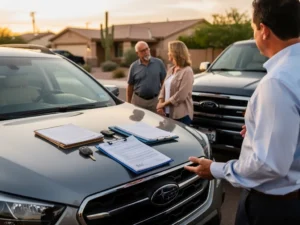
Titling errors rank among the most common—and most avoidable—problems in Arizona. Clients often assume any car, truck, or RV can move straight into a trust regardless of financing. That assumption creates delays, rejected paperwork, and unnecessary probate exposure for families across the Phoenix East Valley.
Can a financed vehicle be titled into a trust?
No, it can not be put into a trust. A vehicle carrying an outstanding loan balance cannot be titled into a trust until that debt is satisfied. Lenders hold a security interest that blocks the transfer, so the loan must be paid off or refinanced first. Attempting the transfer prematurely simply results in a rejected title application at the Arizona MVD.
Other frequent missteps include:
- Forgetting to update beneficiary designations after a divorce or remarriage
- Leaving high-value or collectible car estate planning Arizona decisions undocumented, exposing rare vehicles to unnecessary probate
- Assuming a will alone transfers vehicle ownership without additional titling steps
Citadel Law Firm estate planning guidance addresses these gaps directly. The firm remains committed to protecting client wealth, minimizing tax exposure, and preventing probate challenges tied to commonly overlooked assets like vehicles. Clear, step-by-step direction reduces the risk of titling errors that otherwise complicate an estate for surviving family members.
Addressing vehicles within your Arizona estate plan represents a critical component of comprehensive wealth protection and seamless asset transfer. By designating beneficiaries, establishing clear titling mechanisms, and documenting your intentions through proper legal instruments, you eliminate ambiguity and reduce administrative burden for your heirs.
Citadel Law Firm’s attorneys integrate vehicle disposition into your broader estate strategy, ensuring that every asset—regardless of category—aligns with your legacy objectives and complies with Arizona statutory requirements.
Learn more about Transferring assets into a trust reading our blog about the subject.
FAQ
How does a vehicle transfer without probate in Arizona?
Arizona vehicle owners file ADOT Beneficiary Designation Form 96-0561, naming a person or trust to inherit a car, truck, RV, or motorcycle outside probate court. If you have a trust we recommend transferring the title to your revocable living trust if possible.
What paperwork does an attorney need before transferring a vehicle title?
Gather the current title, loan or lien documents if unpaid, the recipient’s full legal name and relationship, and existing trust documents confirming vehicle titling status.
Does a will alone transfer a vehicle to heirs?
No, a will alone does not handle a car transfer unless the title is properly coordinated through a beneficiary designation or trust as part of the broader estate plan. Although a car should not end up in probate it is easier if it is addressed beforehand.
Meet Attorney David Gerszewski

Attorney David Gerszewski is specialized in Estate Planning, Trust & Probate Law and the founder of Citadel Law Firm PLLC. He is known for making legal matters easy to understand. His background in finance and tax law makes the estate planning strategies he designs for his clients just right. He was elected a Rising Star by Superlawyers.com 4 years in a row (2023-2026).
WE WOULD LOVE TO HEAR FROM YOU!
CALL US AT (480) 565-8020
Or use the button below to schedule your free estate planning consultation.
